
Call us now :08045803806
 Send Inquiry
 Send Inquiry
Refurbished HP Codemaster Defibrillator
Price 65000 INR/ Piece
MOQ : 1 Piece
Refurbished HP Codemaster Defibrillator Specification
- Dimension (L*W*H)
- 20 X 30 X 39.7 Millimeter (mm)
- Weight
- 10.9 Grams (g)
- Automation Grade
- Semi-Automatic
- Shape
- Rectangular
- Suitable For
- Adult & Pediatric Patients
- Product Type
- Codemaster Defibrillator
- Display Type
- Digital
- Humidity Range
- 5% to 95% (non-condensing)
- Frequency
- 50 Hz
- Application
- Hospital
- Treatment Type
- Electrical Cardioversion/Defibrillation
- Use
- Cardiac resuscitation, Emergency defibrillation
- Function
- Defibrillation, Cardioversion, ECG Monitoring
- Phase
- Single Phase
- Accuracy
- ECG: 1%
- Storage Capacity
- Internal memory for event documentation
- Power
- AC Power / Battery Operated
- Properties
- Advanced monitoring features, Biphasic and monophasic defibrillation
- Height
- 23 cm
- Material
- Plastic
- Temperature Range
- 0C to 45C
- Color Code
- White & Grey
- Voltage
- 220V AC, 50Hz
- Display
- Large LCD display
- Power Source
- AC Mains, Rechargeable Battery
- Synchronization
- Yes, for cardioversion
- Waveform
- Biphasic/Monophasic selectable
- Event Markers
- Yes (CPR, shock, etc.)
- Alarm System
- Visual and audible alarms for arrhythmia and battery
- ECG Lead Configuration
- 3-lead and 5-lead ECG monitoring
- User Interface
- Membrane keys & Rotary knob
- Charging Time
- <10 seconds to 360 J
- Battery Backup
- Internal rechargeable battery, up to 2 hours
- Printer
- Integrated strip printer
- Language
- English (standard)
- Paddle Storage
- Integrated paddle holders
- Electrode Type
- Paddle and Pad compatibility
- Safety Standard
- Meets IEC 60601-1 medical standards
- Noise Rejection
- >100 dB
- Self Test
- Automatic daily and power-on self-tests
- Maximum Energy Output
- 360 Joules (Monophasic)
Refurbished HP Codemaster Defibrillator Trade Information
- Minimum Order Quantity
- 1 Piece
- Payment Terms
- Cash Advance (CA)
- Delivery Time
- 7-10 Days
- Main Domestic Market
- All India
About Refurbished HP Codemaster Defibrillator
Other Detail:
| Model Number | CodeMaster XL+ |
| Category Type | High speed Defibrillator |
| Brand | HP |
| Usage/Application | Emergency |
| Battery Type | Rechargeable,sealed lead-acid battery. 4 Ah,12 V nominal |
| Power Supply | 100 to 230 VAC +/- 15%,50/60 Hz |
| Charging Time | 2 hours to 90% of full capacity,18 hours to 100% capacity |
| Energy | 2,3,5,7,10,20,30,50,70,100,150,200,300,and 360 joules |
| Device Capacity | 2.5 hours monitoring or 50 full-energy discharges or 1 hour monitoring and recording |
| Heart Rate Display | 20 to 280 bpm |
| Battery Indicators | Illuminated LED indicates battery is charging. Low Battery message appears on the monitor |
Advanced Cardiac Care with Versatility
With the HP Codemaster Defibrillator, clinicians can perform defibrillation, cardioversion, and continuous ECG monitoring on both adults and pediatric patients. The device's selectable biphasic and monophasic waveforms, together with high energy output, deliver effective intervention in emergency situations. Integrated alarms, quick charging time, and seamless paddle or pad usage enhance its value in critical environments.
User-Friendly Design with Integrated Features
This defibrillator features intuitive controls using membrane keys and a rotary knob, making operations swift during emergencies. Its large digital LCD display provides clear data, and the integrated strip printer documents events efficiently. Automatic self-tests further guarantee reliability, giving staff confidence in device readiness at all times.
Reliable Power and Data Management
The internal rechargeable battery offers up to 2 hours of backup, and AC mains power supports extended use. The device records and stores event data for comprehensive documentation, and it meets IEC 60601-1 medical safety standards for assured hospital use. Paddle storage and convenient design fit into any hospital environment efficiently.
FAQ's of Refurbished HP Codemaster Defibrillator:
Q: How does the HP Codemaster Defibrillator support emergency cardiac care in hospitals?
A: This defibrillator provides swift defibrillation and electrical cardioversion, featuring selectable biphasic/monophasic waveforms and rapid charging (<10 seconds to 360J). Its ECG monitoring (3-lead or 5-lead) and robust alarm system help medical teams effectively respond to cardiac events in both adult and pediatric patients.Q: What are the steps for using the defibrillator's ECG monitoring and defibrillation functions?
A: Place the ECG leads (3-lead or 5-lead) on the patient for continuous monitoring. Select desired defibrillation mode (biphasic/monophasic), set energy level, and charge. Apply the paddles or adhesive pads, confirm patient condition, and deliver shock as needed. The rotary knob and membrane keys ensure quick mode selection and operation.Q: When should the internal rechargeable battery be utilized?
A: The internal battery is ideal during power outages or patient transport, providing up to 2 hours of uninterrupted operation. It ensures device availability during emergencies or when AC mains power is temporarily inaccessible.Q: Where can this defibrillator be most effectively deployed?
A: The HP Codemaster Defibrillator is designed primarily for hospital environments, including emergency rooms, ICUs, and cardiology units. Its portability, integrated features, and robust alarms make it suitable for deployment wherever advanced cardiac monitoring and intervention are required.Q: What benefits does the integrated memory and printer offer during usage?
A: The internal memory and integrated strip printer allow for efficient event documentation, such as ECG tracings and event markers (CPR, shocks delivered). This aids in maintaining accurate medical records and supports clinical review and audit.Q: How does the device ensure patient and operator safety?
A: It adheres to IEC 60601-1 medical safety standards and features advanced noise rejection (>100 dB), visual and audible alarms for arrhythmia and battery levels, and automatic self-tests. These safety measures protect both patients and medical staff during operation.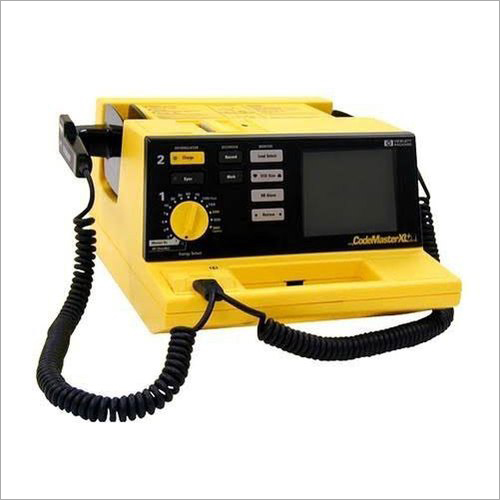
Tell us about your requirement

Price:
Quantity
Select Unit
- 50
- 100
- 200
- 250
- 500
- 1000+
Additional detail
Mobile number
Email

More Products in ICU Defibrillator Category
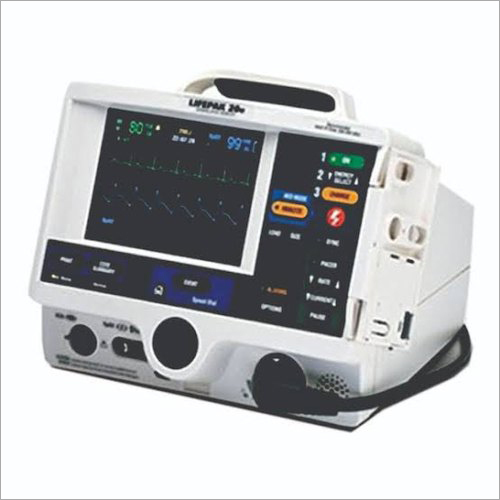
Lp20 Refurbished Biphasic Physio Control Defibrillator
Price 95000 INR / Piece
Minimum Order Quantity : 1 Piece
Properties : Refurbished, Portable
Display : LCD
Storage Capacity : Up to 50 events
Power : AC, Battery
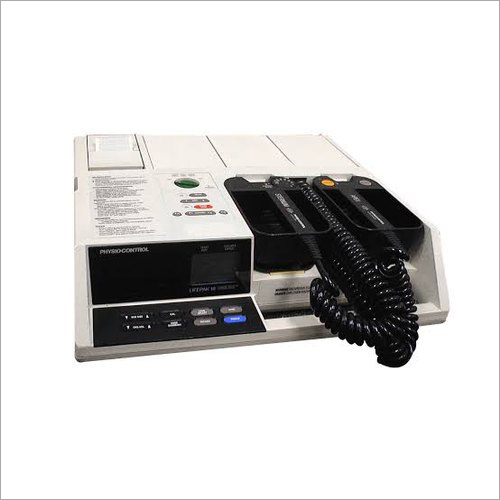
Medtronic Physio Control Defibrillator
Price 65000 INR / Piece
Minimum Order Quantity : 1 Piece
Properties : Portable, Rechargeable, Builtin Printer
Display : Digital Display
Storage Capacity : Internal Record Printer
Power : 360 Joules max
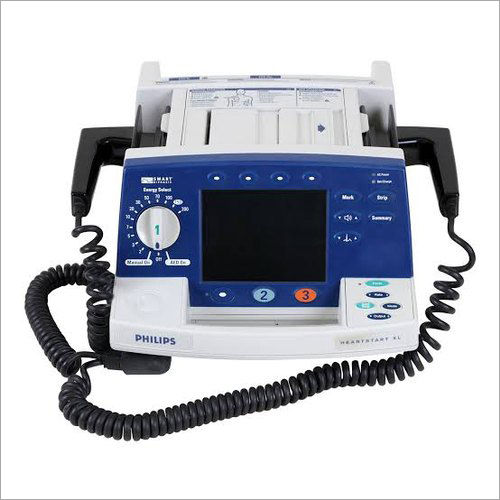
Philips Heartstart XL Defibrillator
Price 95000 INR / Piece
Minimum Order Quantity : 1 Piece
Properties : Biphasic defibrillation, ECG monitoring, Pacing, AED & Manual modes
Display : LCD TFT Color Liquid Crystal Display
Storage Capacity : 100 minutes ECG or 50 shocks
Power : Mains/Battery operation
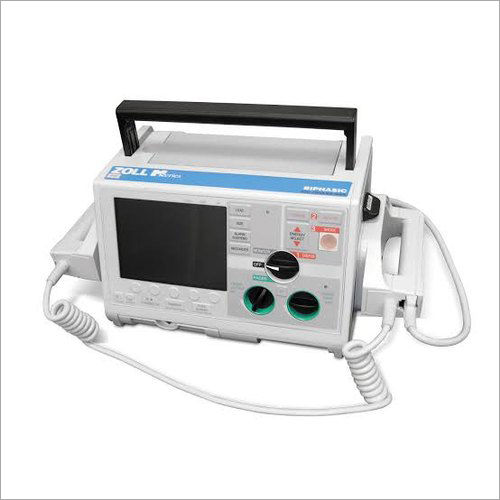
M Series Refurbished Biphasic Zoll Defibrillator
Price 93000 INR / Piece
Minimum Order Quantity : 1 Piece
Properties : Refurbished, portable, biphasic
Display : LCD Display
Storage Capacity : Data storage for patient records
Power : AC mains or internal battery

 Send Inquiry
Our Products


Gali No. 1, Opposite NH-1, Near Samalkha City Mall, Panipat - 132101, Haryana, India

Mr Sandeep
(Proprietor)
Mobile :08045803806
 Send Inquiry
 Send SMS
Developed and Managed by Infocom Network Private Limited.
